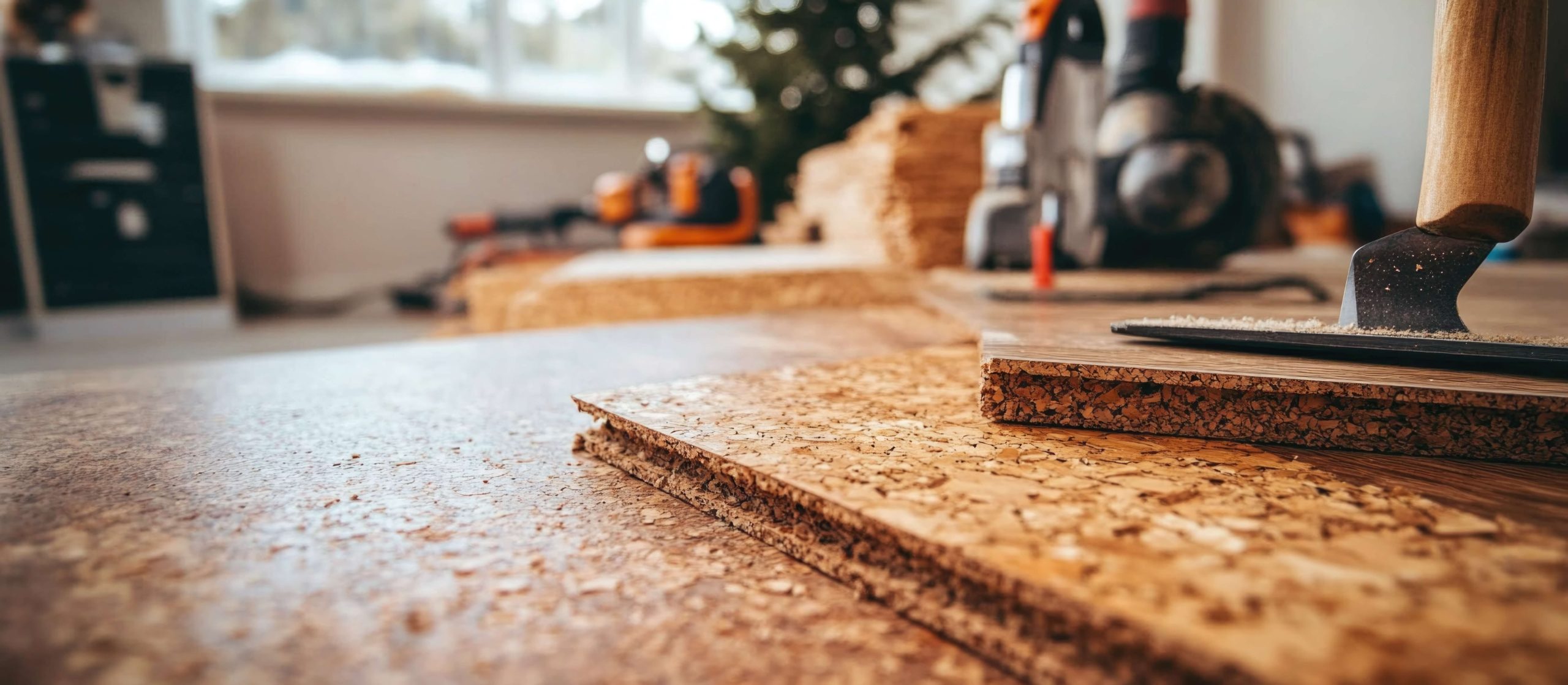
Cork flooring is not a trend. It is a natural floor material with a history of use in homes and commercial spaces for more than 100 years. According to the Food and Agriculture Organization of the United Nations, cork oak forests absorb millions of tons of CO₂ annually while remaining fully renewable because the tree is never cut down, making cork suitable for a wide range of modern flooring needs.
A properly installed cork floor can last 25 to 40 years, reduce impact noise by up to 50%, and provide natural thermal insulation that helps stabilize indoor temperatures. These performance benefits explain why cork is increasingly chosen as a durable flooring option in modern homes, especially where comfort, efficiency, and sustainability matter.
In this guide, we explain what cork flooring is, how it is made, how it performs underfoot, and whether its pros and cons make it the right type of flooring for your space.
Table of Contents
What Is Cork Flooring? Cork Facts and Basics
Cork flooring is a flooring option made from the bark of the cork oak tree (Quercus suber). The bark regenerates naturally, allowing cork to be harvested repeatedly without damaging the tree. This harvesting process is one of the key reasons cork is widely recognized as a sustainable building material.
What Cork Flooring Is Made Of
A cork floor is created from the bark of the cork oak, combined with a natural wax called suberin that gives cork its flexibility and water resistance. Heat and pressure are then applied to bind cork granules together into dense surface cork layers. Because cork is harvested only from the outer bark, it remains a renewable resource and one of the most environmentally friendly floor materials available.
How Cork Flooring Differs From Solid Hardwood
Unlike hardwood flooring, cork has a cellular structure filled with millions of tiny air pockets. These cells allow cork to compress under pressure and rebound once the weight is removed. This structure creates a noticeably softer feel underfoot, especially with each foot for a floating floor system. It also provides better noise absorption than wood flooring and offers natural insulation properties not found in ceramic or stone tile.
How Cork Flooring Is Made (Flooring Made Step by Step)
Harvesting Cork Without Cutting Trees
Cork is harvested by hand every nine years. The tree remains alive throughout the process and actually grows stronger with each harvest cycle. This method makes cork one of the few flooring products that improves forest health over time while supporting long-term environmental balance.
Processing and Granulation
After harvest, cork bark is air-dried and then ground into granules or cork dust. These granules are sorted by density and size to ensure consistent quality. Some cork products rely on natural binders, while others use resin-assisted binding to increase stability, especially in demanding flooring applications.
Forming Cork Flooring Panels
Once prepared, the granulated cork is compressed under heat to form solid slabs. These slabs are then cut into tiles and planks, including modern cork flooring planks, depending on the intended flooring application and installation method.
Finishing Layers and Surface Treatments
Modern cork flooring includes a protective outer layer that protects cork from everyday wear. UV-cured finishes and optional sealants are added to improve durability and moisture resistance. These finishes directly affect how well the floor resists scratches, stains, and water exposure, which is important because cork is prone to surface damage if left unprotected.
Types of Cork Flooring (Two Types of Cork Flooring)
Natural Cork Flooring
Natural cork flooring is a single-layer product made entirely from cork. It offers a warm, natural look and feel, but is more sensitive to moisture and direct sunlight. Without proper sealing or UV protection, cork is prone to fading over time.
Engineered Cork Flooring
Engineered cork flooring uses multiple layers to improve structural stability. This construction makes cork more durable and better able to handle temperature changes, making it a reliable option for a wider range of environments.
Floating Cork Flooring (Floating Floor Systems)
A floating cork floor uses click-lock joints and installs without adhesive. These cork floating floors include a built-in underlayment and are popular for DIY projects because they install quickly and provide excellent comfort underfoot.
(Internal link opportunity: floating floor installation guide)
Glue-Down Cork Tiles
Glue-down cork flooring adheres directly to the subfloor. These glue-down tiles are commonly used in commercial flooring applications, where stability is critical. This installation method also allows the floor to be refinished over time, extending its lifespan.
Cork Flooring Composition Breakdown
Core Structure Explained
The core of cork flooring is made up of millions of air-filled cells. These cells provide shock absorption, thermal insulation, and acoustic control. Together, these characteristics make cork a durable flooring choice for living spaces, apartments, and multi-story buildings.
Wear Layer and Protective Finishes
Thicker wear layers improve resistance to scratches, help maintain the floor’s appearance over time, and make it easier to maintain cork floors with routine cleaning and care.
Cork Flooring Performance Characteristics
Comfort and Underfoot Feel
Cork is noticeably softer than vinyl flooring or ceramic tiles. This softness reduces joint fatigue and makes cork comfortable for standing areas like kitchens. The natural cushioning effect is one of the key reasons cork offers superior comfort compared to harder flooring materials.
Durability and Life Span
A well-maintained cork floor can last for decades. Cork is a durable option for most residential settings, although sharp impacts can leave dents because cork is prone to compression under heavy point loads.
Water and Moisture Behavior
Cork is considered water-resistant flooring but not fully waterproof. When properly sealed, cork performs well in kitchens because cork is naturally resistant to moisture penetration. However, it is not suitable for areas with standing water.
Temperature and Thermal Insulation
Cork naturally regulates temperature and works well with radiant heating systems when installed correctly. This helps maintain a consistent indoor environment throughout the year.
Sound Absorption and Noise Reduction
Cork reduces impact noise more effectively than vinyl tile or hardwood. This makes it an excellent choice for condos, apartments, and upper floors where sound control is important.
Pros and Cons of Cork Flooring
Advantages and Benefits of Cork Flooring
The main benefits of cork flooring include comfort, thermal insulation, sustainability, and sound control. Cork flooring offers a balance of performance and environmental responsibility that few materials can match.
Cons of Cork Flooring to Consider
The primary cons of cork flooring include sensitivity to sharp objects, fading when exposed to direct sunlight, and the need for periodic sealing to maintain performance and appearance.
Cork Flooring Design and Style Options
Cork flooring is available in patterns that mimic wood, stone, and modern tiles. Finishes range from light to dark with matte or satin sheen, allowing cork to complement both modern and traditional interiors.
How to Install Cork Flooring
Floating Cork Floor Installation
Floating floors install quickly and are suitable for most home improvement projects, especially when installing cork floating floors over existing subfloors.
Glue-Down Installation Method
Glue-down installation requires professional preparation but offers maximum stability. This method is often preferred when using glue-down tiles in high-traffic or commercial environments.
How to Maintain Cork Floors
Daily care involves sweeping and using a damp mop. Felt pads and floor mats help protect high-use areas and prevent surface wear.
(Internal link opportunity: how to maintain cork floors)
Cork Flooring Ratings and Certifications
When choosing cork flooring, look for low-VOC certifications and appropriate density ratings. Cork is biodegradable and supports healthy indoor air quality. The U.S. Green Building Council recognizes cork as a sustainable flooring material due to its renewable harvest cycle.
Cork Flooring Cost Overview
Cork flooring typically costs per square foot less than premium hardwood but more than vinyl plank flooring. Over time, the lifetime value often offsets the initial cost due to durability and comfort benefits.
Cork Flooring Compared to Other Flooring
Compared to hardwood, cork is softer and quieter. Compared to vinyl plank flooring, cork is more sustainable. Compared to ceramic, cork is warmer underfoot and more forgiving, making it a versatile flooring option.
Is Cork Flooring Right for You? Choose Cork Flooring Wisely
Cork flooring is well-suited for bedrooms, living areas, and apartments. It may not be ideal for unsealed wet rooms or heavy industrial use, so evaluating your specific flooring needs is important.
Cork Flooring Alternatives to Consider
Alternative flooring options include bamboo, engineered hardwood, luxury vinyl plank, and linoleum. Each offers different benefits depending on budget, durability, and design preferences.
Frequently Asked Questions About Cork Flooring
What is cork flooring made of?
Cork flooring is made from the bark of the cork oak tree (Quercus suber), which is harvested without cutting down the tree. The bark is ground into granules, compressed under heat and pressure, and formed into tiles or planks. Natural suberin in cork provides flexibility, insulation, and water resistance.
How is cork flooring made step by step?
Cork flooring is made by harvesting cork bark every nine years, air-drying it, grinding it into granules, compressing it into slabs, cutting it into tiles or planks, and applying protective finishes. This process creates durable cork flooring panels while keeping the cork oak tree alive and renewable.
Is cork flooring durable for long-term use?
Yes. Cork flooring is durable and can last 25 to 40 years when properly installed and maintained. Its cellular structure allows it to compress and rebound under pressure, making it resistant to cracks. However, heavy point loads or sharp objects can cause dents if the surface is not protected.
Is cork flooring waterproof or just water-resistant?
Cork flooring is water-resistant but not fully waterproof. When sealed with a protective finish, cork can handle moisture exposure in kitchens and living areas. However, standing water or excessive humidity can damage unsealed cork flooring over time.
Is cork flooring good for pets?
Cork absorbs impact well, but cork is prone to scratching from sharp claws.
Is cork flooring environmentally friendly?
Cork flooring is considered one of the most environmentally friendly flooring materials because it is harvested from renewable bark without cutting down the tree. Cork oak forests absorb significant amounts of CO₂ and regenerate naturally, making cork a sustainable flooring choice.